History of the palazzo
The building's past — and where the record disagrees with itself.
The palazzo dates back to the mid-16th century, built for the Cicala family — a family said to have "given Genoa leaders, poets and cardinals." Ownership later passed to the De Mari noble family, and then, in the 18th century, to the Ferro family, who restored it in the Rococo style — the elaborate facade on Piazza delle Scuole Pie is cited as an example of that restoration. The Cicala and De Mari families were both real, well-documented families of the Genoese nobility, though this specific ownership chain for the building, and the Ferro-era Rococo restoration, are hard to verify beyond that. An independent academic history of Genoa's historic palazzi (the University of Genoa's FOSCA project, drawing on 18th–19th century guides by Ratti and Alizeri) instead attributes the building to the Cicala family via the poet and Republic consul Lanfranco Cicala, with construction credited to the architect Bernardino Cantone da Cabio — it does not mention the De Mari or Ferro families, or a Rococo restoration, at all. Accounts of the palazzo's early ownership differ, and it isn't clear which is more complete.
From the late 19th century the building was used for offices rather than as a residence: first for the insurance company "Italia Assicurazioni," then for the freight agency "Odino Valperga." Both were real Genoese companies — Italia was a genuine marine and general insurer founded in Genoa in 1872, and Odino Valperga was a real Genoese freight-forwarding firm (later trading as Odino Valperga Italeuropa) — though it isn't confirmed that either had offices specifically in this building. The palazzo returned to private hands in June 1999 and to residential use, with Locanda di Palazzo Cicala opening as a hotel not long after.
Restoration and design
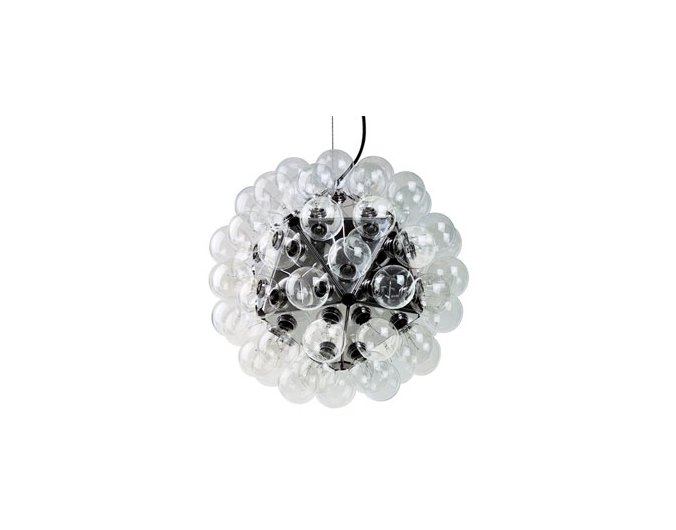
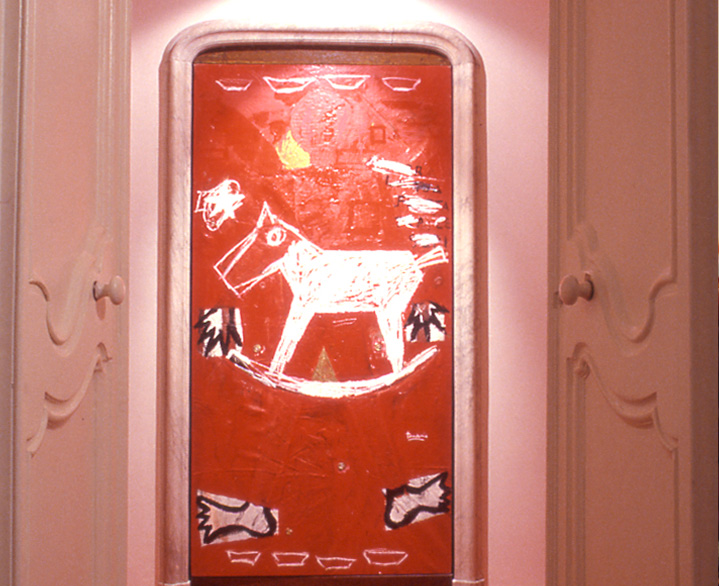
The palazzo's restoration into a hotel is credited to architect Andrea Freggia. The interior mixed contemporary design with period furniture, including a red sofa by designer Ron Arad and a ball-shaped lamp by Achille Castiglioni. Castiglioni lamps of the kind described can be seen in the property's own photography, shown below.
The Charm Hotels network
The hotel's footer once carried a badge linking to charmhotelsweb.com — a third-party marketing network for small independent "hotels de charme," not the property's own brand. Locanda di Palazzo Cicala was, at least at some point, a member of that network — a historical affiliation, not the property's own name.

Company details (historical)
The operating company was named Cicala s.r.l., Italian VAT/tax number 01303720997, registered at Piazza San Lorenzo 16, Genova. This reflects who operated the property historically — not a current business listing.